

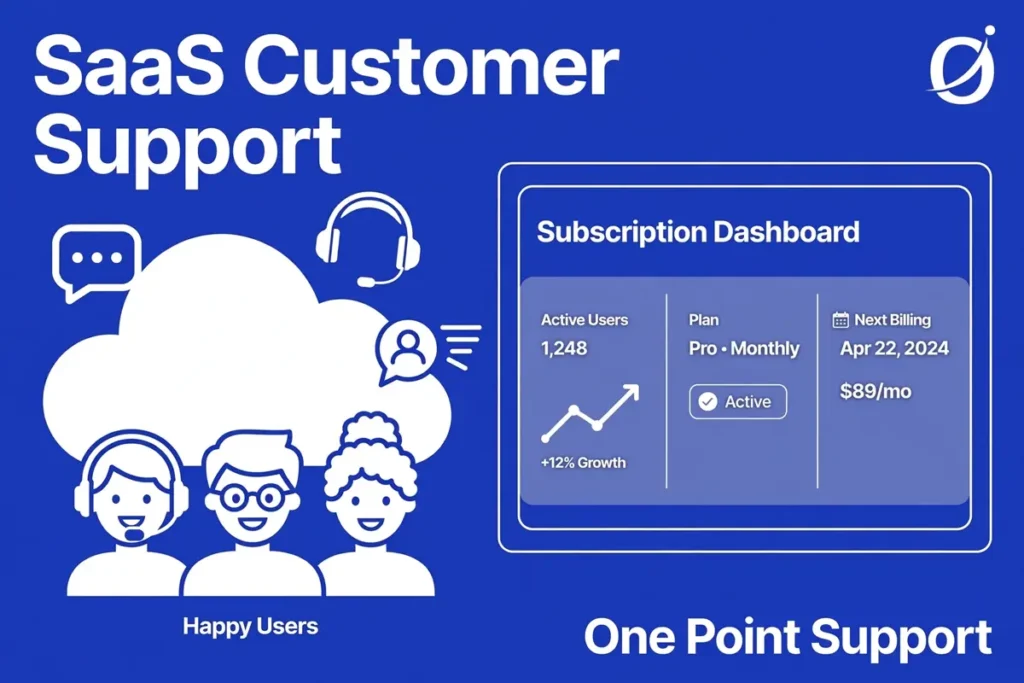
A new customer signs up for your software, invites a colleague, and gets stuck assigning permissions. The product technically works, but the customer cannot complete the task that made them sign up.
SaaS customer support helps users understand and use subscription software, resolve account questions, and report problems. A strong process connects the support team with product and engineering without turning every question into a developer interruption.
Organize support around the customer journey
Separate onboarding questions from billing requests, product guidance, and suspected defects. Each needs different information and a different next step. A customer who cannot find a feature may need a short explanation; a feature that fails repeatedly needs investigation.
Identify the actions that help a new user reach initial value. These might include importing approved data, connecting an account, or inviting teammates. Prepare clear instructions and note which steps agents can perform versus explain.
Use customer language in the help center. If users ask how to “add a coworker,” an article labeled only with an internal permissions term may be hard to find. Search terms and support questions can show where documentation needs clearer wording.
Create useful technical escalations
For a suspected bug, collect the affected account, relevant environment, expected behavior, actual behavior, and steps to reproduce it. Include timestamps and error messages where appropriate, using approved handling for sensitive information.
An illustrative report might say that an export fails after a particular filter is applied, while the unfiltered export succeeds. That gives engineering a testable observation. “Customer says reporting is broken” does not.
One Point Support’s helpdesk support is relevant to discussing intake and escalation work. If the product requires sustained familiarity, consider the role of dedicated support agents within an agreed training plan.
Keep support current with product changes
Give agents release notes before a change reaches customers. Explain new behavior, changed permissions, known limitations, and the approved response to likely questions. Update screenshots and templates that no longer match the product.
During an incident, designate a source of truth for status and customer updates. Agents should share confirmed information and a realistic next update time. They should not invent a restoration estimate because a customer asks for one.
After resolution, record the incident outcome and review which conversations could have been clearer. That review can improve future communication without assigning support responsibility for an engineering fault.
Connect support feedback with product decisions
Tag recurring difficulties consistently and include context about the affected task. A feature request from a first-time user may reflect a missing feature, unclear navigation, or an incomplete setup step.
Share patterns with product managers using example cases and counts from a defined period. Avoid presenting every complaint as proof that a feature must change. Support supplies evidence; product teams weigh that evidence alongside other priorities.
For repetitive questions, AI customer service can be discussed as an assistive layer. Keep account-sensitive actions and uncertain technical answers within the appropriate human review process.
Measure help that moves customers forward
Track response and resolution times, repeat contacts, escalation completeness, and customer feedback. For onboarding, review whether customers can complete the task after receiving help. A friendly conversation that leaves the setup unfinished still needs attention.
Use churn or renewal patterns carefully. Support quality can be part of the customer experience, but price, product fit, and many other factors also influence those outcomes. Do not attribute every renewal to a single support interaction.
FAQs
Can SaaS customer support be outsourced
Yes, when product knowledge, tools, account permissions, and escalation routes are well defined. Start with a manageable scope and review real cases. Keep product decisions and engineering changes with the people authorized to make them.
Should support agents fix software bugs
Most support agents should reproduce, document, and escalate bugs unless development work is explicitly part of their role. They can provide approved workarounds. Changes to production code need the company’s engineering and release process.
How do we train agents on a changing product
Use a test environment, task-based training, current documentation, and a regular release briefing. Evaluate whether agents can complete common customer tasks. Product familiarity should be refreshed whenever behavior or policies change.
What should a SaaS support handoff contain
Include the customer goal, affected account, relevant evidence, steps tried, current owner, and promised next update. Remove unnecessary sensitive information. The next person should be able to continue the case without restarting discovery.
Support the tasks customers came to complete
Talk with One Point Support about your product, common support cases, and escalation requirements.